
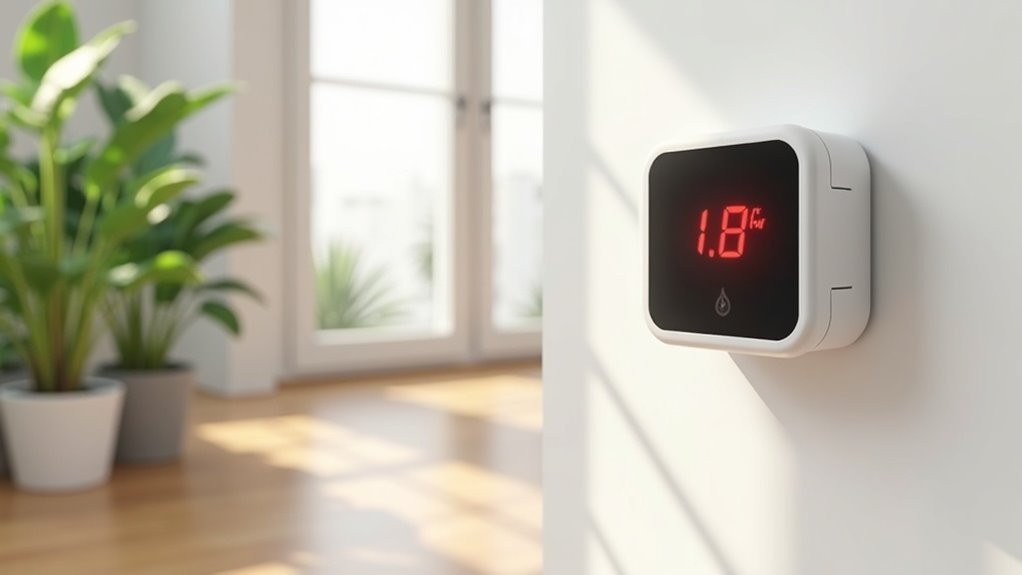
CO₂ monitors signal the need for fresh air by detecting elevated carbon dioxide levels, typically above 1000 ppm. Equipped with NDIR sensors, these devices provide real-time insights into indoor air quality. Look for models that include alert systems with color-coded indicators and sound alerts; they’ll notify you when air quality declines. Features like smart integration and data logging further enhance their effectiveness. Discover which specific monitors excel in these areas to optimize your indoor environment.
Key Takeaways
- CO₂ monitors like the Airthings CO Alert provide real-time monitoring and alert users when CO₂ levels exceed 1000 ppm, signaling inadequate airflow.
- The Aranet4 HOME activates sound alerts at 1400 ppm, effectively indicating the need for fresh air in indoor environments.
- Birdie Design Monitor shuts down operations when it detects poor air quality, prompting immediate action for ventilation.
- Color-coded indicators on devices, such as green for healthy and red for high levels, help users easily recognize when fresh air is necessary.
- Smart CO₂ monitors with integration capabilities can work with automated ventilation systems to manage air quality proactively.
Understanding CO₂ Monitors
While you mightn’t think about it often, understanding CO₂ monitors is vital for maintaining a healthy indoor environment.
These devices measure carbon dioxide levels, providing essential data on indoor air quality and ventilation needs. Many CO₂ monitors feature color-coded indicators—green for healthy, yellow for caution, and red for high levels—prompting you to improve ventilation when necessary.
CO₂ monitors provide crucial insights into indoor air quality with color-coded indicators for effective ventilation management.
High CO₂ concentrations, typically exceeding 1000 ppm, can signal inadequate airflow, leading to discomfort and reduced cognitive function.
Advanced monitors may also track temperature, humidity, and VOCs, offering an extensive overview of your indoor air quality and ensuring a safer space.
Importance of Air Quality
Air quality greatly impacts your health and well-being, as poor indoor environments can lead to a range of problems, from respiratory issues to reduced cognitive performance.
High levels of carbon dioxide (CO₂) often signal inadequate ventilation, causing discomfort and impairing your focus. By using air quality monitors, you can gain real-time data on CO₂ levels, allowing you to identify when fresh air is needed.
These monitors typically employ color-coded indicators to alert you when ventilation is necessary, ensuring you maintain a healthy indoor climate.
Prioritizing air quality is essential for enhancing your overall well-being and productivity.
How CO₂ Monitors Work
CO₂ monitors utilize sensors, primarily those employing non-dispersive infrared (NDIR) technology, to accurately measure carbon dioxide levels in your environment.
When CO₂ concentrations rise beyond set thresholds, these devices activate alert mechanisms, such as visual indicators or sound notifications, prompting you to guarantee proper ventilation.
Understanding these measurement techniques and alert systems is essential for maintaining ideal air quality and preventing health issues.
CO₂ Measurement Techniques
Several techniques are employed in CO₂ monitors to guarantee accurate measurement of carbon dioxide levels in indoor environments. Most commonly, Non-Dispersive Infrared (NDIR) sensors are used. These sensors detect infrared light absorption by CO₂ molecules, providing real-time readings in parts per million (ppm). Typically, air quality monitors set thresholds at 400 ppm for healthy air, with alerts at 1000 ppm. Advanced models may integrate with smart home systems for automated ventilation. Continuous monitoring enhances air quality and mitigates health risks related to poor circulation.
| Technique | Description |
|---|---|
| NDIR | Measures CO₂ via infrared absorption |
| Real-time Read | Displays CO₂ levels in ppm |
| Visual Alerts | Color-coded lights for air quality |
| Smart Integration | Connects with home systems for automation |
| Continuous Monitoring | Assesses ventilation effectiveness |
Alert Mechanisms Explained
Understanding how alert mechanisms work in CO₂ monitors is essential for maintaining healthy indoor air quality. These monitors detect carbon dioxide levels, measuring concentrations in parts per million (ppm). When levels exceed preset thresholds, typically around 1000 ppm, an alarm activates, prompting you to ventilate the space.
Most devices use color-coded LED indicators: green for safe levels, yellow for caution, and red for high levels. Advanced models may include sound alerts, visual signals, and data logging features.
Features to Look for in CO₂ Monitors
When selecting a CO₂ monitor, pay close attention to its alert mechanisms and sensor accuracy.
You need a device that not only provides timely alerts when CO₂ levels rise but also guarantees precise measurements for reliable data.
These features are essential for maintaining a safe and comfortable indoor environment.
Alert Mechanisms
To guarantee you’re alerted promptly about air quality changes, effective CO₂ monitors come equipped with various alert mechanisms that enhance your awareness.
Look for devices with clear color-coded indicators signaling healthy (green), rising (yellow), and high (red) CO levels. Sound alerts are essential, activating when CO₂ exceeds safe thresholds to make sure you take action for adequate ventilation.
Advanced models may feature visual traffic light displays for quick assessments, while historical data tracking helps identify patterns over time. Some smart monitors even send real-time notifications to your devices, keeping you informed about the need for fresh air in your environment.
Sensor Accuracy
Accurate sensor technology is essential for effective CO₂ monitoring. When selecting a monitor, prioritize those with NDIR (Non-Dispersive Infrared) sensors, as they offer superior sensor accuracy and reliability in measuring CO levels.
Look for devices featuring color-coded indicators to quickly gauge air quality, along with sound alerts that prompt immediate action when CO levels rise. Data logging capabilities can provide valuable insights into historical trends, enhancing your understanding of air quality in your home.
Finally, choose monitors with a response time under 60 seconds to guarantee swift detection and response to elevated CO₂ levels, maintaining a healthy indoor environment.
Health Benefits of Monitoring CO₂ Levels
Monitoring CO₂ levels is essential for maintaining a healthy indoor environment, as elevated concentrations can lead to various adverse health effects.
High CO₂ levels can trigger symptoms like headaches, dizziness, and impaired cognitive function, which greatly affect your productivity and well-being. Studies show that keeping CO₂ levels below 1000 ppm enhances alertness and reduces fatigue.
Furthermore, effective ventilation, driven by CO₂ monitoring, improves indoor air quality, lowering the risks of respiratory diseases and airborne virus transmission.
Regularly managing CO₂ levels also leads to better sleep quality, contributing to overall health benefits you can’t afford to overlook.
Recommended CO₂ Monitors for Home Use
While ensuring a healthy indoor environment is essential, selecting the right CO₂ monitor can greatly enhance your ability to manage air quality effectively. Here are some recommended models:
| Monitor | Features | Ideal For |
|---|---|---|
| Airthings CO Alert | Real-time monitoring, alerts for high CO₂ | General home use |
| Birdie Design Monitor | Shuts down on poor air quality | Minimalist environments |
| Aranet4 HOME | Sound alerts at 1400 ppm | Awareness-focused users |
| Airthings View Plus | Smart home integration, notifications | Tech-savvy households |
| Qingping Pro (Gen 2) | Touchscreen, multi-parameter analysis | thorough monitoring |
These devices help you monitor CO₂ levels, signaling when you need fresh air to combat poor air quality.
The Future of Air Quality Monitoring
As awareness of indoor air quality grows, the future of air quality monitoring is poised for significant advancements.
As the focus on indoor air quality increases, we can expect groundbreaking advancements in air quality monitoring technology.
You’ll see innovations that will enhance your indoor climate management, such as:
- AI and machine learning for accurate data analysis
- Real-time alerts for CO₂ and VOC levels
- Integration with smart home systems for automated ventilation
- Holistic assessments of multiple air quality parameters
These developments will guarantee you receive timely updates and can efficiently maintain a healthy environment.
With advanced air quality monitors, you’ll be empowered to respond to changing conditions, leading to improved health and productivity in your spaces.
