
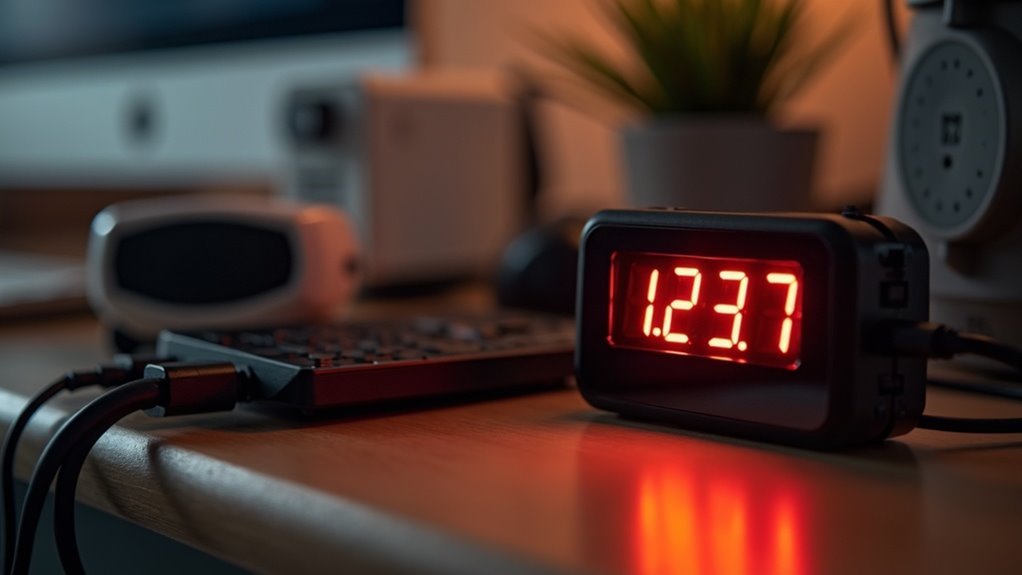
To measure plug load with a watt meter, start by calibrating the device and plugging it into an outlet. Next, connect your appliance to the watt meter’s output socket. Turn on the device, and the meter will track its energy use. For accurate results, record the wattage displayed and observe the cumulative energy usage over time. By comparing the measured wattage against rated specifications, you can identify inefficiencies in energy consumption and optimize your usage. Discover more about maximizing efficiency.
Key Takeaways
- Ensure the watt meter is calibrated and functioning before measuring plug load to obtain accurate results.
- Plug the watt meter into an outlet, then connect the device into the watt meter’s output socket securely.
- Turn on the device to allow the watt meter to track real-time power consumption in watts.
- Record the wattage and monitor cumulative energy usage over time to identify high-consumption devices.
- Analyze results by comparing wattage against device specifications and calculating costs based on usage hours.
Understanding Plug Load and Its Importance
Understanding plug load is essential, especially since it can greatly impact your energy expenses.
Plug load refers to the electricity consumed by devices plugged into outlets, often accounting for up to 30% of a building’s total energy use, as noted by the U.S. Department of Energy. Common culprits include computers, printers, and kitchen appliances, which frequently remain on unnecessarily.
Setting Up the Watt Meter
Before you begin measuring plug load, you’ll want to set up your watt meter correctly to guarantee accurate readings.
First, verify the meter is calibrated and functioning. Plug it into an electrical outlet, then connect your device’s plug into the watt meter’s outlet.
Select the appropriate settings, making sure it’s set to measure watts and that the range matches your expected load. Confirm that all connections are secure and that the device is turned on during measurement.
Finally, record the wattage displayed on the meter, representing the device’s real-time power consumption. This setup is essential for reliable data.
Connecting Devices to the Watt Meter
Once you’ve set up your watt meter, it’s essential to connect your devices correctly to guarantee accurate measurements.
Begin by plugging the watt meter directly into the wall outlet, ensuring a stable connection. Next, insert the device you want to measure into the output socket of the watt meter, making sure it fits securely to prevent any interruptions during measurement.
Turn on the device, allowing the watt meter to start tracking power consumption in watts. Finally, record the wattage displayed on the meter’s screen while the device operates to analyze its energy usage over time or under varying conditions.
Monitoring Power Consumption
As you monitor power consumption with a watt meter, you’ll gain valuable insights into the energy usage of your devices. By plugging the watt meter into the wall outlet and your device into its socket, you can see real-time wattage readings.
Many models also track cumulative energy usage in kilowatt-hours (kWh), offering an extensive view of your consumption patterns. This information helps you identify energy hogs, enabling you to make informed decisions about energy efficiency.
Regularly tracking these metrics assists in estimating your monthly electricity costs based on your utility provider’s rates, ultimately promoting a more energy-conscious lifestyle.
Analyzing Results for Energy Efficiency
When you analyze the results from your watt meter, it’s important to compare the wattage consumption of your devices against their rated power specifications. Look for discrepancies that indicate inefficiencies.
Regular monitoring reveals patterns in energy usage, helping you target interventions effectively. Establish baseline measurements for both active and standby modes to quantify potential savings through behavior modifications or equipment upgrades.
Calculate annual energy costs by multiplying measured wattage by usage hours and your local electricity rate.
Finally, implement energy efficiency programs based on your findings, focusing on high-consuming devices to optimize energy use and reduce overall costs.
