
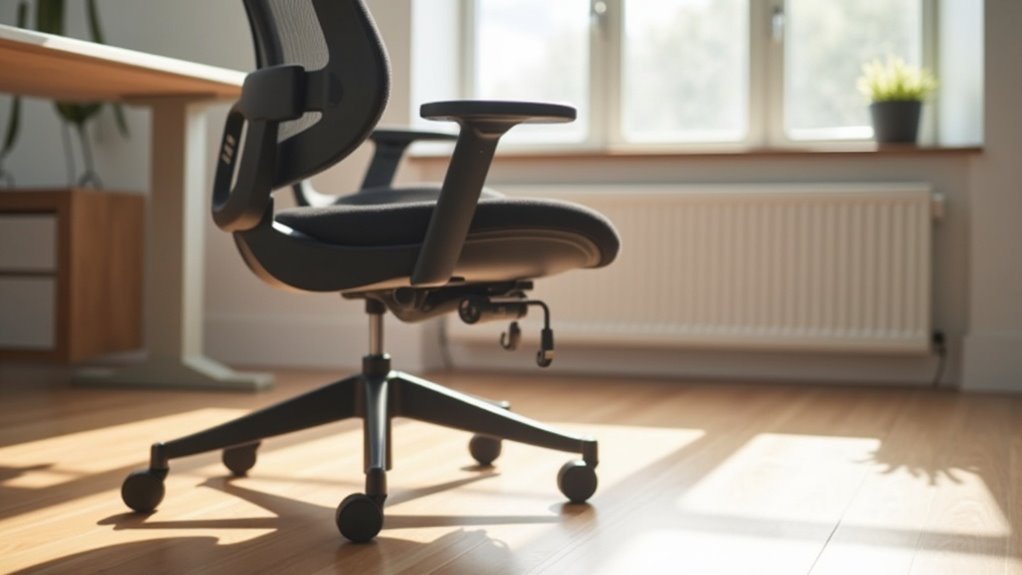
To support micro-movement in your office chair, adjust the tilt settings appropriately. Aim for a backrest angle between 100-120 degrees and set the tilt tension so it’s smooth for easy movement. Utilize a synchronous tilt mechanism to allow your seat and backrest to move together, promoting natural weight shifts. Experiment with different adjustments to find what best enhances your comfort and engagement. Discover further insights on optimizing your chair for better health and productivity.
Key Takeaways
- Adjust tilt tension to promote smooth movement, encouraging natural micro-movements throughout the day.
- Set the backrest angle between 100-120 degrees to optimize lumbar support and spinal alignment.
- Utilize a synchronous tilt mechanism to facilitate natural weight shifting for enhanced comfort.
- Regularly check and adjust settings to maintain dynamic movement and prevent stiffness.
- Experiment with different tilt mechanisms, like knee tilt or multi-tilt, for personalized comfort and support.
Understanding Micro-Movement in Office Chairs
Micro-movement in office chairs is essential for maintaining comfort and supporting your body during long hours of sitting.
Chairs equipped with synchronous tilt mechanisms encourage micro-movement by allowing the seat and backrest to tilt together, promoting natural body movement and ideal weight distribution. This design fosters active sitting, enabling dynamic posture changes that enhance circulation and reduce discomfort.
Additionally, adjustable tilt tension lets you customize resistance, encouraging subtle shifts throughout the day.
The Importance of Tilt Mechanisms for Comfort
Tilt mechanisms play a pivotal role in enhancing comfort during prolonged sitting. They facilitate micro-movements by allowing the backrest and seat to move in relation to each other, promoting spinal alignment and reducing discomfort.
An ergonomic office chair with adjustable tilt tension lets you customize resistance, keeping your body engaged and enhancing focus. Multi-function tilt mechanisms support dynamic sitting, accommodating various postures throughout the day.
Regular micro-movements improve circulation, reducing the risk of musculoskeletal disorders associated with long hours of sitting. Ultimately, understanding tilt mechanisms is essential for optimizing comfort and health at your workspace.
Types of Tilt Mechanisms That Enhance Micro-Movement
When considering the best options for enhancing your sitting experience, understanding the various types of tilt mechanisms can greatly impact your comfort and well-being.
The synchronous mechanism promotes active sitting by enabling the backrest and seat to tilt together, facilitating micro-movements.
The 3D movement mechanism encourages frequent weight shifts, preventing stiffness during long hours of work.
The harmonic tilt mechanism adapts to your movements, providing consistent support.
The knee tilt mechanism allows for natural reclining while maintaining foot contact, and the multi-tilt mechanism offers independent adjustments, promoting personalized comfort and ideal posture throughout your day.
How to Adjust Tilt Settings for Optimal Support
To achieve ideal support while seated, it’s crucial to fine-tune your chair’s tilt settings based on your unique needs. Start by adjusting the tilt tension for smooth movement, which encourages micro-movements that relieve spinal pressure. Set the backrest to recline between 100-120 degrees for peak lumbar support. Use a synchronous tilt mechanism to synchronize seat and backrest movement, allowing your body to shift weight naturally. Regularly check your adjustments to guarantee dynamic movement. Experiment with different settings to find what best supports your active sitting position.
| Adjustment Type | Recommended Setting | Purpose |
|---|---|---|
| Tilt Tension | Smooth & Balanced | Encourage Micro-Movements |
| Backrest Angle | 100–120 Degrees | Enhance Lumbar Support |
| Tilt Mechanism | Synchronous | Facilitate Natural Movement |
Benefits of Micro-Movement for Long-Term Health
Micro-movement plays an essential role in promoting long-term health, especially for those who spend extended hours seated. Engaging in subtle movements combats the negative effects of prolonged sitting by enhancing blood circulation, which reduces the risk of circulatory issues.
These micro-movements also alleviate muscle tension and fatigue, boosting your focus and workplace performance. Additionally, they improve spinal alignment, lowering the chances of developing chronic back pain.
