
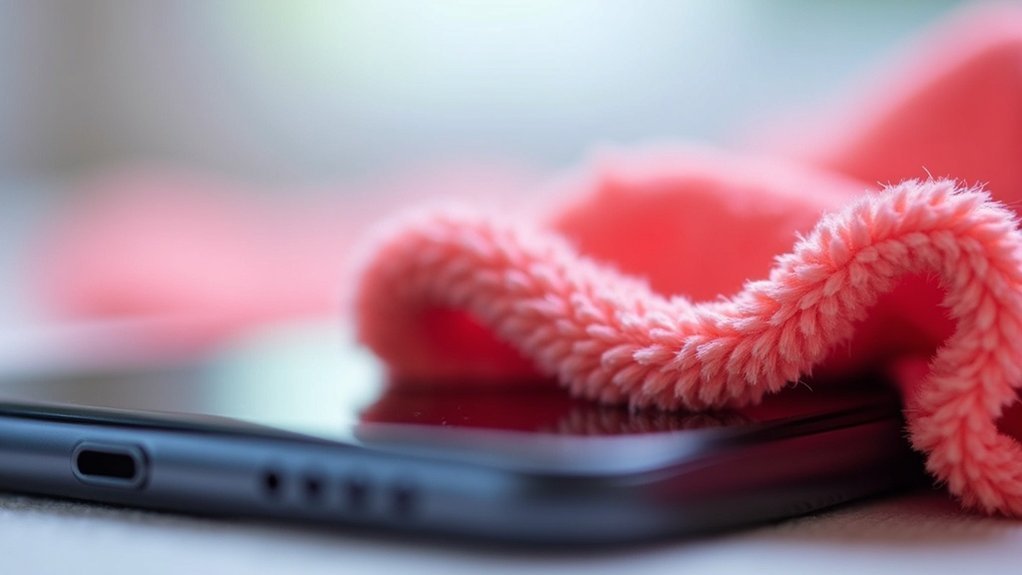
Microfiber cloths avoid screen scratches due to their unique structure of ultra-fine fibers that are softer than silk. These fibers effectively trap dust and moisture without being abrasive. Their non-scratch properties come from their electrostatic abilities, capturing dirt particles as small as 0.15 microns. They absorb up to seven times their weight in liquid, which keeps screens streak-free. If you want to guarantee you’re using them correctly and maximizing their benefits, there’s more to uncover about their usage and care.
Key Takeaways
- Microfiber fibers are finer than silk, providing a soft touch that prevents scratching on delicate surfaces like screens.
- The non-abrasive nature of microfiber ensures that it cleans without damaging the surface it touches.
- Electrostatic properties of microfiber attract and trap dirt, reducing the risk of scratching from abrasive particles.
- Microfiber cloths can absorb liquids and debris, minimizing contact with the screen surface during cleaning.
- Regular maintenance of microfiber cloths ensures they remain clean and effective, further protecting screens from scratches.
The Unique Structure of Microfiber
Microfiber cloths showcase an innovative structure that sets them apart from traditional cleaning materials. Comprised of fibers finer than silk, microfiber exhibits a unique structure that enhances its cleaning power.
The soft fibers effectively trap dust and moisture, ensuring a non-abrasive nature essential for preventing scratches on delicate surfaces like screens. This structure allows microfiber to capture particles as small as 0.15 microns, delivering superior cleaning without damaging surfaces.
Additionally, being lint-free, these cloths maintain a streak-free finish, further reducing the risk of leaving behind particles during screen cleaning.
Cleaning Mechanism and Effectiveness
When using microfiber cloths, you’ll notice their cleaning mechanism is both efficient and effective, largely due to their unique electrostatic properties. This allows them to attract and trap dirt and grime, guaranteeing superior cleaning without scattering particles.
The non-abrasive nature guarantees that surfaces remain undamaged, effectively avoiding scratching, especially on delicate screens. Additionally, microfiber cloths can absorb up to seven times their weight in liquid, enhancing their effectiveness by preventing streaks and residue.
Proper maintenance of these cloths is vital, as it helps maintain their effectiveness, enabling them to remove up to 99% of bacteria with just water.
Proper Usage Techniques to Prevent Scratches
To maintain a scratch-free screen while using microfiber cloths, it’s important to implement specific usage techniques.
Start by using a blower brush or canned air to remove larger particles, preventing scratches from embedded grit.
Dampen a corner of the microfiber cloth with distilled water for stubborn fingerprints, as moisture helps lift dirt without harsh cleaning solutions.
Always use gentle circular motions with minimal pressure to avoid scratching the screen.
Verify your microfiber cloth is clean and free from contaminants.
Regularly wash and maintain your cloths according to best practices to preserve their effectiveness and maintain the clarity of your screen.
Comparison With Other Cleaning Materials
While many people rely on traditional cleaning materials for screen maintenance, a comparison reveals significant advantages to using microfiber cloths.
These non-abrasive cloths can clean without scratching, effectively capturing particles as small as 0.15 microns. In contrast, traditional cleaning materials like paper towels leave lint and may act like sandpaper.
Microfiber cloths absorb up to seven times their weight in liquid, reducing the need for harsh cleaning agents that can harm screen coatings.
Maintenance for Longevity and Safety
Microfiber cloths require proper maintenance to guarantee their longevity and safety in screen cleaning applications.
Regularly wash microfiber cloths in cold water without bleach or fabric softeners, as this preserves their ability to trap dirt and maintain clarity.
To maintain their dirt-trapping ability and clarity, wash microfiber cloths regularly in cold water without bleach or fabric softeners.
Store microfiber cloths in a clean, dust-free environment to avoid contamination that could lead to scratches.
Before each use, inspect microfiber cloths for wear or dirt; damaged cloths compromise their effectiveness.
Maintain a cleaning routine by using microfiber cloths for cleaning tasks every one to two weeks, which helps reduce waste and prevents the need for harsher cleaning methods.
