
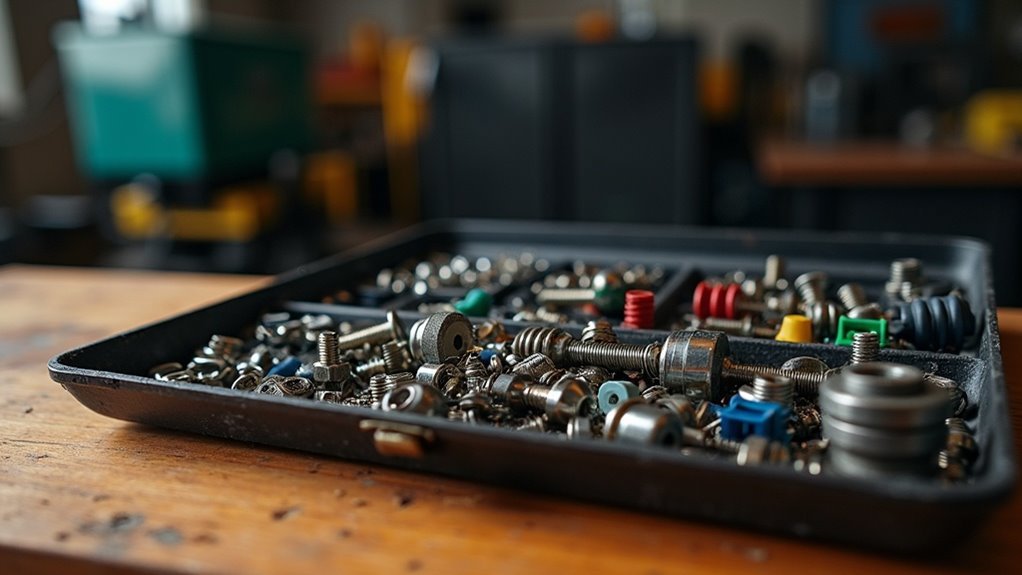
A spare parts box reduces downtime by providing quick access to critical components you need during equipment failures. When you have essential parts readily available, you cut down wait times for technicians and lower maintenance-related downtimes by up to 30%. This approach not only saves on emergency shipping costs but also enhances customer satisfaction through reliable service. By adopting effective inventory practices, you can guarantee your operations remain agile and responsive, with even more insights to come.
Key Takeaways
- A spare parts box ensures immediate access to critical components, minimizing delays during equipment failures.
- Well-organized inventory allows technicians to quickly locate necessary parts, reducing wait times for repairs.
- Maintaining essential components on hand can decrease maintenance-related downtimes by up to 30%.
- Having spare parts readily available lowers emergency shipping costs and overtime labor expenses.
- Quick access to spare parts enhances overall operational resilience and customer satisfaction through reliable service.
The Role of Spare Parts in Operational Resilience
When it comes to maintaining operational resilience, spare parts play an indispensable role in minimizing downtime. Effective spare parts management guarantees that critical components are readily available, allowing for swift repairs and uninterrupted operations.
By implementing robust inventory management practices, you can markedly reduce downtime, thereby enhancing productivity. This proactive approach mitigates operational risks, assuring your systems remain reliable and efficient.
Additionally, having a well-stocked inventory helps lower maintenance costs by avoiding emergency shipping fees and overtime labor. Ultimately, prioritizing spare parts availability strengthens your operational resilience, keeping your business agile and responsive to customer demands.
Benefits of Quick Access to Spare Parts
Maintaining operational resilience hinges not only on having spare parts on hand but also on the speed at which you can access them.
Quick access to critical spare parts can greatly reduce downtime, ensuring immediate repairs and keeping your production schedules intact.
Here are some benefits:
- Faster response times during equipment failures
- Reduced wait times for technicians
- Lower maintenance-related downtimes by up to 30%
- Savings on emergency shipping costs and overtime labor
- Enhanced customer satisfaction through reliable service
Identifying Essential Components for Your Equipment
To guarantee your equipment runs smoothly, it’s crucial to identify and prioritize essential components in your spare parts inventory. Focus on critical components like motors, belts, and sensors, as well as high-wear items such as filters and gaskets. Regularly analyze failure rates to determine which components are essential for maintenance. Here’s a quick reference table to assist your spare parts management:
| Component Type | Importance Level | Replacement Frequency |
|---|---|---|
| Motors | High | As needed |
| Filters | Medium | Monthly |
| Seals | High | Quarterly |
| Sensors | Medium | As needed |
Organizing Your Spare Parts Inventory for Efficiency
To maximize efficiency in your spare parts inventory, start by classifying parts based on their priority and usage frequency.
Implementing streamlined storage solutions, like labeled bins, can considerably reduce the time spent searching for essential components.
Additionally, efficient inventory tracking methods will guarantee you maintain ideal stock levels and minimize downtime during critical repairs.
Classifying Parts by Priority
Classifying spare parts by priority is essential for ensuring operational efficiency, especially when equipment failures occur unexpectedly.
By differentiating between critical and non-critical components, you can streamline repairs and minimize downtime.
Focus on these strategies:
- Store high-priority parts, like filters and gaskets, in easily accessible locations.
- Organize inventory by usage patterns to expedite searches for frequently replaced items.
- Utilize labeled bins for improved visibility and organization.
- Regularly review stock levels to align with operational needs.
- Implement an effective spare parts management program to adapt to changing demands.
These practices enhance your maintenance team’s effectiveness and responsiveness.
Streamlined Storage Solutions
Efficient spare parts inventory management can greatly enhance your maintenance operations, especially during critical repair situations.
Implementing categorized storage systems—like high-priority and low-priority—ensures quick access to essential items, reducing search time. Labeled bins or shelving for frequently replaced parts, such as filters, facilitate swift retrieval, minimizing downtime.
Grouping spare parts by usage frequency allows your team to quickly identify necessary components, vital in urgent scenarios. A logical layout, with high-wear items near workstations, streamlines workflows.
Regularly updating accurate inventory records keeps spare parts readily available, preventing stockouts and directly contributing to reduced operational interruptions.
Efficient Inventory Tracking Methods
While managing spare parts inventory might seem like a challenging task, employing effective tracking methods can greatly streamline your operations.
Parts management is essential for reducing lead times and ensuring the availability of the right parts when equipment fails.
Consider these strategies for efficient inventory tracking:
- Classify parts by criticality and usage frequency.
- Implement a logical storage layout with labeled bins.
- Utilize barcode scanning or RFID technology for real-time data.
- Conduct regular audits to identify obsolete parts.
- Integrate inventory management with maintenance schedules to minimize the cost of downtime.
These methods enhance accuracy and improve overall operational efficiency.
Aligning Spare Parts With Maintenance Strategies
Aligning spare parts inventory with your maintenance strategies is essential for minimizing downtime and enhancing operational efficiency.
By integrating your spare parts strategy with maintenance schedules, you guarantee critical spares are readily available during routine servicing, greatly reducing unexpected breakdowns.
Implementing predictive maintenance allows you to anticipate part replacements, further minimizing disruptions.
Scheduling part replacements during planned downtimes streamlines maintenance activities, guaranteeing repairs don’t interfere with production.
Additionally, this alignment helps you optimize inventory levels, reducing holding costs while maintaining the availability of essential components.
Ultimately, this strategic approach is key to effectively reducing downtime and improving overall productivity.
Strengthening Supplier Relationships for Reliable Availability
To guarantee reliable availability of spare parts, it’s crucial to cultivate strong relationships with your suppliers.
Strengthening supplier relationships can greatly reduce lead times for critical spare parts, minimizing downtime.
Strengthening supplier relationships can significantly shorten lead times for essential spare parts, effectively reducing downtime.
- Collaborate with trusted vendors for better pricing and priority service.
- Communicate regularly about inventory levels and anticipated demands.
- Implement proactive stock management strategies.
- Develop a diverse supplier base, incorporating both OEM and aftermarket options.
- Engage in joint planning initiatives for improved forecasting accuracy.
