
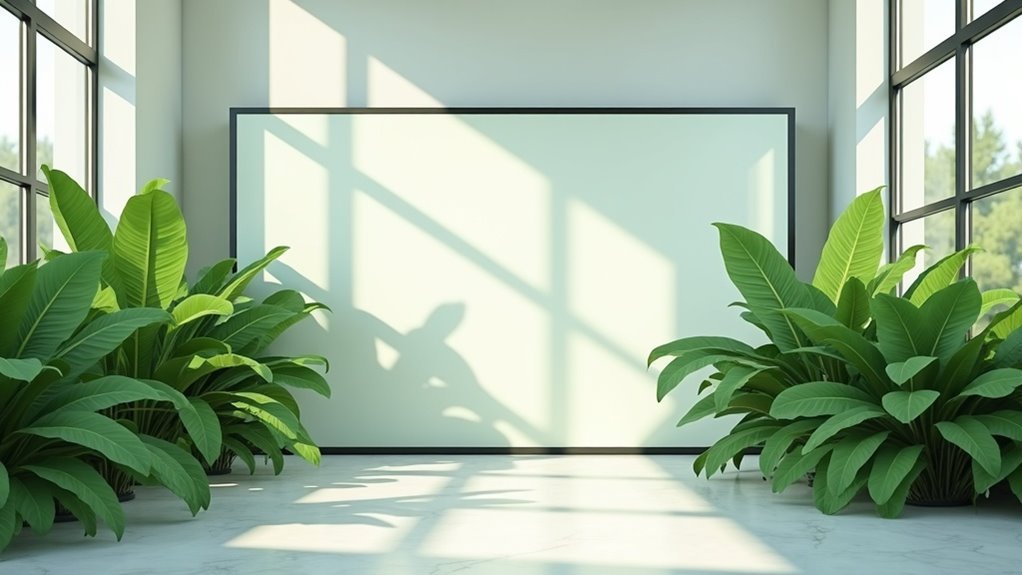
Strategic plant placement helps you avoid harmful reflections from energy-efficient windows that can scorch your greens. When you position plants away from reflective surfaces, you’re creating a sanctuary for them to thrive, shielded from excessive glare and heat. Taller plants can act as natural barriers, while selecting species that thrive in filtered light minimizes the risks of leaf burn. By thoughtfully arranging your garden, you not only protect your plants but also enhance your outdoor aesthetics—discover more ways to elevate your landscape.
Key Takeaways
- Strategic plant placement reduces exposure to harmful reflections from energy-efficient windows, preventing leaf burn and dehydration.
- Positioning plants away from reflective surfaces minimizes excessive glare and heat stress, promoting healthier growth.
- Taller plants can serve as natural barriers, shielding delicate species from direct sunlight and screen reflections.
- Selecting species that thrive in filtered light helps diffuse harsh sunlight and reduces the risk of glare-related damage.
- Regular monitoring of plant health ensures timely adjustments to care routines, maintaining a thriving garden away from reflective interference.
Understanding Window Reflection Effects on Plants
When you place plants near windows, you might unknowingly expose them to harmful reflections that can wreak havoc on their health.
Window reflections from energy-efficient windows can concentrate sunlight, causing excessive glare and heat stress. This intensified light can lead to leaf burn and dehydration, leaving your plants vulnerable. The soil dries out quicker, jeopardizing their well-being.
To protect your green friends, consider using protective window films that diffuse this harsh light and create a more suitable environment for growth.
The Importance of Plant Placement
When you carefully position your plants, you’re not just enhancing their beauty; you’re also ensuring they bask in ideal light while avoiding harmful heat damage.
By placing them thoughtfully away from reflective surfaces, you create a sanctuary where delicate blooms and greens can thrive.
This attention to detail not only protects their health but elevates the overall aesthetic of your outdoor space.
Optimal Light Exposure
How can the right placement of your plants transform their significance? By ensuring ideal light exposure, you enable them to soak up natural sunlight, essential for thriving.
Positioning them away from reflective surfaces minimizes glare, protecting delicate leaves from thermal stress and dehydration.
With strategic plant placement, they can efficiently harness red and blue wavelengths, crucial for photosynthesis and overall health.
Regularly monitoring and adjusting their locations can enhance their growth performance, preventing the pitfalls of insufficient or excessive light.
Embrace the art of placement, and watch your plants flourish in their beautifully curated environment.
Preventing Heat Damage
While ideal light exposure nurtures plant growth, it’s equally important to contemplate how reflective surfaces can impact that growth.
Position your heat-sensitive plants away from window reflections to prevent heat damage from concentrated glare. Taller plants can act as natural shields, protecting delicate species from direct sunlight.
Proper spacing and thoughtful orientation create a microclimate, ensuring favorable conditions for thriving greenery. By understanding the angle of sunlight and the reflective properties of different windows, you can strategically place your plants.
This mindful arrangement will help maintain their health and vibrancy, minimizing the risk of scorching and promoting lush, flourishing life.
Creating Natural Barriers With Vegetation
Creating natural barriers with vegetation not only shields your garden from harsh window reflections but also enhances its beauty.
By strategically positioning taller plants or shrubs near windows, you can absorb and diffuse those intense rays, protecting your delicate plants. Dense foliage acts as a shield, minimizing glare and heat exposure, fostering healthier growth while preventing dehydration.
Embrace a variety of plant heights and types to create a layered defense against concentrated sunlight. This thoughtful integration of vegetation not only safeguards your garden but also enriches biodiversity, crafting a vibrant ecosystem that flourishes around your home.
Choosing the Right Plants for Sunlight Diffusion
When it comes to selecting plants for sunlight diffusion, think about species that thrive in filtered light, like snake plants and pothos.
These beauties not only soften harsh reflections but also flourish in their new homes.
Ideal Plant Species Selection
Selecting the right plants can transform your space into a serene oasis, especially when it comes to minimizing the harsh glare from sunlight reflections.
Opt for plant species that thrive in filtered light, ensuring they’re shade-tolerant for longevity.
Consider incorporating:
- Plants with larger leaves to diffuse direct sunlight effectively.
- Snake plants and pothos for their adaptability to lower light conditions.
- A variety of heights to create a natural barrier that absorbs and scatters harsh light.
Light-Filtering Plant Characteristics
To enhance your space while minimizing glare, choosing plants with specific light-filtering characteristics is essential.
Opt for species like snake plants and pothos, which boast broad leaves that effectively diffuse sunlight and reduce glare from windows. These adaptable species thrive in lower light conditions, making them perfect for areas prone to overwhelming reflections.
Additionally, select foliage that absorbs and scatters light, helping to minimize heat damage from concentrated rays. Incorporating varying heights creates a layered effect, further softening harsh light.
Optimal Placement Strategies
While finding the perfect spot for your plants, remember that strategic placement can truly enhance their ability to diffuse sunlight and minimize glare.
To improve your plant arrangement, consider the following:
- Choose plants like snake plants and pothos that thrive in filtered light.
- Use taller plants to create shade for delicate species, protecting them from harsh window reflections.
- Group plants with similar light needs to maximize ideal exposure and guarantee even light distribution.
Additionally, incorporating window films can complement your efforts, diffusing sunlight while fostering a healthy, thriving environment.
Mitigating Heat Damage From Reflections
When you place plants near windows with reflective surfaces, you might unwittingly expose them to intense heat that can lead to browning or wilting.
This heat damage often intensifies with low-emissivity (Low-E) windows, where glare can double the temperature.
To protect your green companions, position them several feet away from these reflective surfaces.
Consider installing anti-reflective window film, which diffuses light and minimizes harmful heat.
Regularly monitoring your plant’s health and adjusting their placement can also promote energy efficiency and create a thriving environment.
Strategies for Protecting Vulnerable Plants
Protecting your vulnerable plants from the harsh effects of screen reflections requires a thoughtful approach that balances aesthetics with practicality.
You can minimize damage by implementing a few strategies:
- Install anti-reflective window films to diffuse light and reduce window glare.
- Plant taller vegetation or barriers nearby to shield delicate plants from heat exposure and reflection-related stress.
- Monitor plant health regularly, adjusting their placement according to seasonal sun angles to maintain ideal growing conditions.
Long-Term Benefits of Proper Plant Placement
By thoughtfully positioning your plants away from reflective surfaces, you can reveal a myriad of long-term benefits that enhance both their health and the beauty of your outdoor spaces. Proper plant placement not only promotes healthy plants but also maximizes light exposure, ensuring they thrive. This strategy aids in soil moisture retention, minimizing water loss and fostering biodiversity. Ultimately, you’ll enjoy enhanced aesthetic appeal as your vibrant, flourishing plants frame your environment beautifully.
| Benefit | Description | Long-Term Impact |
|---|---|---|
| Healthy Plants | Prevents damage from concentrated sunlight | Improved growth |
| Maximum Light Exposure | Avoids overheating and dehydration | Robust health |
| Soil Moisture Retention | Minimizes water loss | Sustainable ecosystems |
| Biodiversity | Supports thriving plant species | Ecological balance |
| Enhanced Aesthetic Appeal | Creates inviting outdoor environments | Increased property value |
Additional Tips for Enhancing Landscape Resilience
To enhance the resilience of your landscape, consider the strategic interplay of plant placement and environmental features.
By thoughtfully positioning your plants, you can mitigate the negative effects of reflective surfaces. Here are a few tips:
Thoughtful plant placement can reduce glare from reflective surfaces, enhancing your landscape’s resilience.
- Incorporate taller plants or structures to create natural barriers against glare.
- Utilize shade-providing structures like awnings or pergolas to protect sensitive species.
- Choose plants tolerant of indirect light to guarantee their health in reflective areas.
Regularly monitoring plant health will help you identify stress indicators early, allowing for timely adjustments that boost your landscape’s resilience.
Keep your garden thriving and vibrant!
