
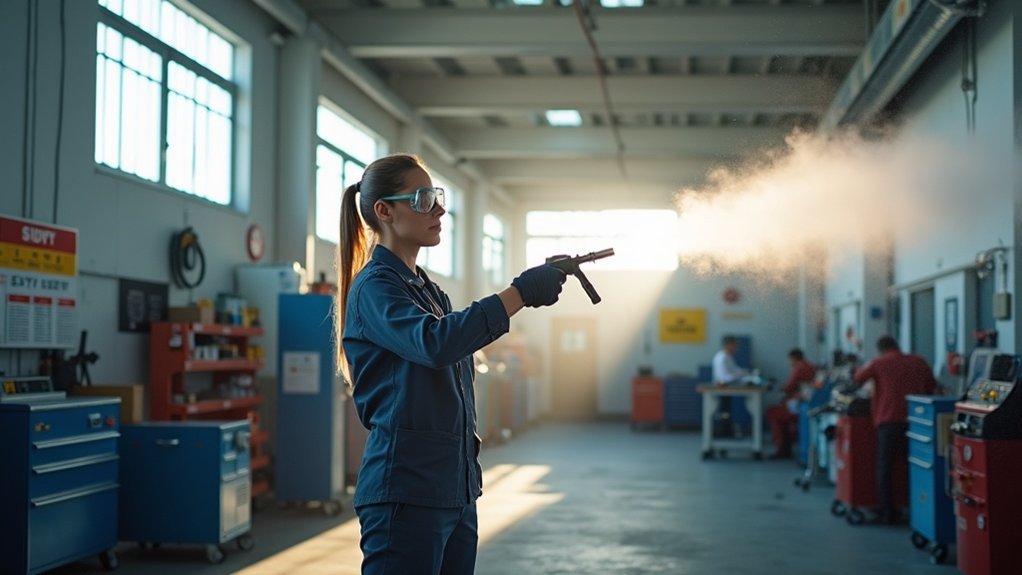
To use compressed air safely, you need to understand the associated risks and comply with legal regulations. Always maintain nozzle pressure below 10 psi, wear appropriate PPE, and avoid using compressed air for cleaning clothing to prevent hazards. Implement local exhaust ventilation to control airborne particles, and consider safer alternatives like vacuuming or manual cleaning. By following these methods, you enhance workplace safety and reduce health risks. Further insights will help solidify your understanding of safe practices.
Key Takeaways
- Maintain nozzle pressure below 10 psi to minimize injury risks when using compressed air.
- Always wear appropriate personal protective equipment (PPE) like goggles and gloves for added safety.
- Avoid using compressed air for cleaning clothing or workers to comply with legal regulations.
- Use local exhaust ventilation to control airborne particles and enhance air quality.
- Consider safer alternatives, such as vacuum cleaners or manual cleaning, to reduce hazards.
Understanding the Risks of Compressed Air
When handling compressed air, it’s crucial to recognize the inherent risks associated with its use. The hazards of compressed air are significant; even low pressure can cause severe injuries.
For instance, air directed at the body may lead to air embolism, where air enters the bloodstream, potentially causing paralysis or death. Additionally, using compressed air to clean clothing can introduce particles that harm your eyes, possibly resulting in vision loss.
Horseplay further exacerbates these risks, emphasizing the need for strict adherence to safety practices. Understanding these dangers can help you maintain a safer work environment when using compressed air.
Legal Regulations Surrounding Compressed Air Use
While understanding the risks of compressed air is essential, it’s equally important to be aware of the legal regulations governing its use. Compliance with these regulations boosts workplace safety and minimizes hazards.
- Many Canadian provinces restrict using compressed air for cleaning clothing or workers.
- OSHA mandates that air pressure in contact with skin mustn’t exceed 30 psi (210 kPa).
- Some regions permit limited use for surface cleaning, requiring strict safety measures.
These legal regulations vary by jurisdiction, so ascertain your practices align with local laws to protect both your employees and your organization.
Identifying Safe Practices for Compressed Air Cleaning
Understanding legal regulations is just the starting point for ensuring safety when using compressed air for cleaning. To minimize risks, keep nozzle pressure below 10 psi and always wear appropriate personal protective equipment (PPE), such as safety glasses and gloves.
| Safety Practice | Recommended Action |
|---|---|
| Pressure Control | Maintain nozzle pressure below 10 psi |
| Airborne Particles Management | Use local exhaust ventilation |
| Worker Protection | Implement effective guarding methods |
Recommended Alternatives to Compressed Air
Although compressed air is commonly used for cleaning, safer alternatives can greatly reduce health risks and improve workplace safety.
Consider these options:
- Wet sweeping techniques: They effectively minimize airborne particles while removing dust and debris.
- Vacuum cleaners with special filters: These prevent dust recirculation, ensuring a cleaner environment.
- Manual cleaning methods: Using brushes or cloths reduces injury risks compared to compressed air.
Essential Maintenance for Compressed Air Equipment
Maintaining compressed air equipment is essential for guaranteeing safety and efficiency in the workplace.
Regularly inspect hoses, fittings, and nozzles for signs of wear, damage, or leaks, as these can lead to unsafe pressure levels. Confirm your air compressor functions correctly and follows the manufacturer’s maintenance recommendations for peak performance.
Drain air receivers frequently to eliminate liquid accumulation, which causes corrosion and malfunctions. Document all inspections and repairs to comply with safety standards governing compressed air systems.
Finally, only qualified personnel should conduct repairs on pressure regulating devices to guarantee safe and proper operation of the equipment.
Importance of Personal Protective Equipment (PPE)
When working with compressed air, understanding the types of personal protective equipment (PPE) required is essential for your safety.
You must adhere to proper PPE usage guidelines and guarantee that you regularly inspect your gear to maintain its effectiveness.
This proactive approach not only protects you from potential injuries but also reinforces a culture of safety in the workplace.
Types of PPE Required
Personal protective equipment (PPE) serves as a critical line of defense when working with compressed air. You must prioritize your safety by utilizing the right PPE to prevent eye injuries and other hazards.
Key types of PPE include:
- Safety goggles or face shields to protect against flying debris
- Hearing protection like earplugs or earmuffs for loud pneumatic tools
- Protective clothing, such as long sleeves and gloves, to shield your skin from high-pressure air jets
Always guarantee your PPE is properly fitted and maintained.
This attention to detail is essential for effective protection during compressed air operations. Stay safe!
Proper PPE Usage Guidelines
Proper usage of personal protective equipment (PPE) is vital in minimizing risks associated with compressed air operations.
Always wear safety glasses or goggles to protect your eyes from flying debris, as even low-pressure air can cause significant damage.
It’s also important to don appropriate protective clothing to shield exposed skin from potential injuries.
In noisy environments where compressed air tools operate above 90 dB, make certain you use hearing protection to prevent hearing loss.
Additionally, participate in regular training sessions to understand the correct use of PPE and its role in maintaining a safe work environment.
Prioritize your safety consistently.
Importance of Regular Inspection
Regular inspection of personal protective equipment (PPE) is essential to guarantee its effectiveness against hazards associated with compressed air use.
Before each shift, you should check your PPE for:
- Signs of wear or damage that could compromise safety
- Proper fit, ensuring it provides adequate protection
- Compliance with OSHA regulations and safety standards
